What is Data Modelling: Types, Techniques & Best Practices
September 19, 2025 — 4 min read

A great data model does more than organise information — it helps a business make better decisions. At its core, a data model is a blueprint: it defines how data is structured, how relationships are represented, and how analysts can extract meaning from it.
A truly effective data model:
A data model is a high-level representation of a company’s data and its relationships. Think of it as a map that shows not just what information exists, but how that information connects.
For example, in an e-commerce company, a relational data model might connect users, orders, and products to reflect how customers purchase items.
1. Start with Business Objectives
A great data model begins with business outcomes. Data engineers must collaborate with stakeholders across departments to ensure the model enables the insights that matter most — whether that’s customer behaviour, financial forecasting, or supply chain optimisation.
2. Define the Grain Level
Grain level refers to the level of detail stored in a dataset. Setting this early is crucial. For example:
3. Consistent Naming Conventions
Names should be easy to understand, human-readable, and consistent. Following an established style guide (such as the SQL style guide) helps avoid confusion. For example, prefer order_date over odt. A good piece of advice is to follow the SQL style guide.
Pro tip: Never mix singular and plural in table names. Pick one and stick to it.
4. Materialisation Decisions
Materialisation defines whether data is stored as tables (precomputed, faster queries) or views (dynamic, always up-to-date but slower). The right choice depends on:
5. Data Quality Assurance
Without clean, accurate data, even the best-designed model will fail. Practices include:
This ensures analysts can trust the outputs that drive executive decisions.
6. Permissions and Data Governance
Great data models respect privacy and compliance requirements. If storing personally identifiable information (PII), regulations such as GDPR or CCPA must guide how data is handled. Work with legal and security teams to define:
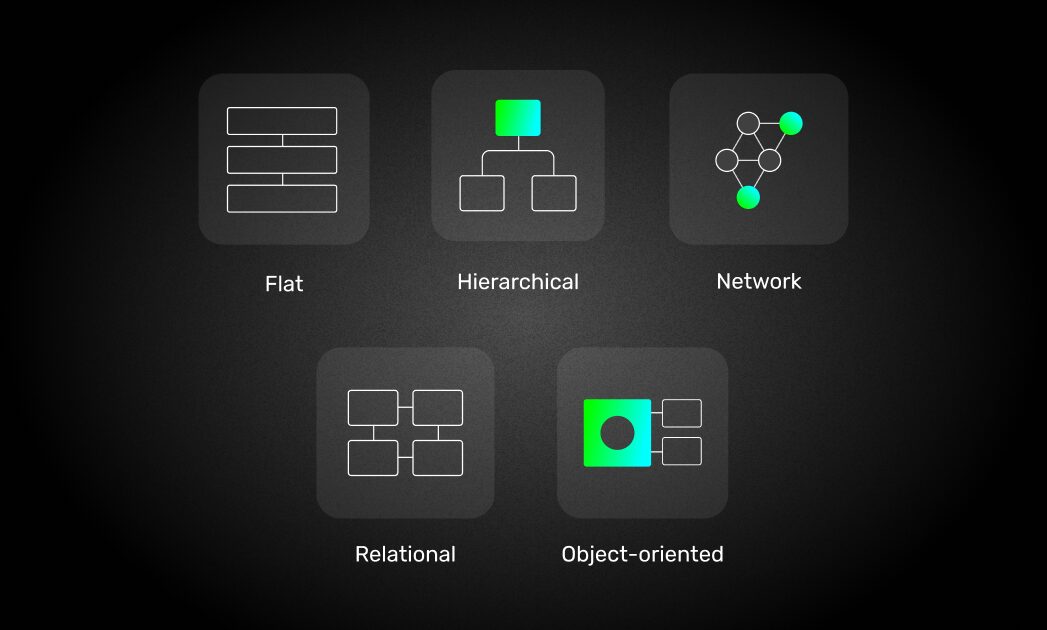
The following are some of the most commonly used data model types, each serving different purposes depending on business and technical needs. While these are the most popular, many other variations and hybrids exist to address more specialised scenarios.
1. Flat Model
The simplest form — essentially a spreadsheet with rows and columns. Best for very small datasets, but quickly becomes limiting as relationships increase.
2. Hierarchical Model
Organised like a tree, with parent-child relationships. Common in early database systems and still used in certain XML or file-based data structures.
3. Network Model
An evolution of the hierarchical model that allows many-to-many relationships. Though less common today, it influenced modern relational systems.
4. Relational Model
The most widely used model, where data is stored in tables with relationships defined by keys. This powers most transactional systems — from banking to retail.
5. Object-Oriented Model
Data is represented as objects, similar to programming in languages like Java or Python. Useful in applications where complex data structures (e.g., multimedia, CAD designs) need to be stored.
A great data model is more than a technical artefact — it’s a business tool. It should:
Choosing the right type of data model depends on your use case, but following best practices ensures your data remains reliable, consistent, and ready to drive decisions.
If you want to discuss your data engineering needs, contact us today.

Petar is our Manager of Data Science Excellence — a mathematician and passionate data enthusiast. A data engineer by profession, he enjoys sports, walks with his dog, good coffee, and spending time with friends.
Partner with us